Sunday, January 31, 2010
Sunday, January 17, 2010
HOPE in Haiti
HOPE has had an active organization in Haiti since 2005. We have received confirmation that all of HOPE’s staff members are safe, but we have not yet been able to contact all of our clients. Additionally, many of HOPE’s staff members are still awaiting news of their own families’ survival. The HOPE Haiti Relief and Development Fund has been created in response to the tragedy. Click here to make a donation and read the updates from the HOPE personnel on the ground.
Here is the rundown on HOPE's response:
The HOPE Haiti Relief and Development Fund reflects HOPE International’s two-tiered commitment to the earthquake that has devastated Port-au-Prince and the surrounding areas of Haiti. HOPE is seeking to raise funds that will be put to use first to meet the urgent needs of Haiti’s population and later to help the people of Haiti rebuild their lives.
HOPE’s relief efforts are being coordinated through a network of sister organizations with over two decades’ experience in Port-au-Prince. We will bring emergency supplies such as bottled water, food, personal care and hygiene items, first aid kits, and medication across the border from the Dominican Republic to Haiti. This localized approach will ensure that goods arrive quickly, without the delays of container shipments and customs processing.
As urgent needs begin to subside, HOPE will evaluate Haiti’s mid- to long-range needs and determine the appropriate response mechanisms to move from relief to development and dependency to self-sufficiency. Please join with us now to help the people of Haiti.
Friday, January 8, 2010
In and Around Brazzaville
I have been in Brazzaville for a little over a month, so I figured it was time to get some pictures up. At some point I will post a description of the city and daily life, but for now, these should help start to tell the story.
Togolese Football Team
Togo's football team had been training this week in the Republic of Congo prior to the Africa Cup of Nations, a continental tournament hosted in Angola that starts next week. The team left training camp today by bus, and shortly after they crossed the border into a disputed Angolan territory, the buses were ambushed by rebels from a separatist group with machines guns who opened fire on them for twenty minutes. The driver of the players' bus was killed and at least six players were injured. Currently some of the professional club teams who have players from across Africa scheduled to play in the tournament are considering having them return to their clubs and not play due to the obvious safety concerns.
Thursday, December 24, 2009
Rwanda's Gacaca Reconciliation Courts
Here is a WSJ article on the wrapping up of Rwanda's government-sponsored reconciliation courts that were set up to process many of the accused perpetrators of the 1994 genocide. (See the NYer reconciliation article linked to in the right margin) This Journal article does a good job of briefly describing the progress the courts have brought about but also the significant human rights concerns they raise.
Sunday, December 20, 2009
Funding of the Congolese Rebels in Eastern DRC.
Here is a NYT article describing a new significant internal UN report on how the Congolese rebels have been financially supported and allowed to operate in Eastern Congo. The conflict in this region has resulted in over 4 million deaths as factions within the country, other nations in the region, and international economic and diplomatic interests worldwide have been involved in the ethnic clashes, highly profitable mining of several essential minerals, and failed and flawed peacekeeping efforts.
Friday, December 18, 2009
Trip to Kinshasa, DRC
Shortly after arriving in Brazzaville, I went with the rest of our team across the river to Kinshasa, the capital of the Democratic Republic of Congo, for a couple of days of meetings and work with HOPE's operation that has been serving DRC since 2004. It was a great opportunity for us to understand their team's best practices and lessons learned. However, I didn't get to explore much of the city, and its technically illegal to take photographs in public in DRC without permission, so the pictures are limited and often a little crooked as I tried to take them stealthily.
Tuesday, December 1, 2009
Quick Stopover in Addis Ababa, Ethiopia
On my way from Kigali to Brazzaville, I had a brief stop over in Addis Ababa, the capital of Ethiopia. The shuttle dropped me off at the hotel around midnight and picked me up at 6 the next morning, so I didn't have time for much beyond taking some pictures out of my hotel window.
See how many satellite dishes you can spot in the picture below. Pretty incredible for corrugated aluminum shacks.
Friday, November 27, 2009
Thanksgiving Feast
We had a big crew and a great spread for Thanksgiving in Kigali, just a couple of days before I had to leave for Brazzaville. My housemate found a massive burner that allowed me to fry a couple of turkeys despite the shallow pot.
Wednesday, November 25, 2009
Leftover Shots from Time in Kigali
Here are just some random pictures from Kigali over the last couple of months that I hadn't posted or put in any of the albums.
Monday, November 23, 2009
Weekend in Kampala
In one of my last weekends in East Africa, I finally got up to Kampala, the capital of Uganda. A fairly big group of us from Kigali made the journey, despite it being about a 10 hour bus ride. It was a quick trip, and I didn't get to take a lot of pictures. However, it was great getting to see Kampala - a larger and more developed city than Kigali - and a handful of us went white water rafting on the Nile, which is about an hour east of the city. I hope to get some pictures up from the river up at a later date.
Friday, November 13, 2009
Trip to Bujumbura, Burundi
Last weekend, one of my housemates and I went down to Bujumbura, the capital of Burundi. Burundi is almost the exact same size as Rwanda and shares its southern border and similar geography. However, conditions in Burundi are much worse than those in Rwanda. It has the third lowest per capita GDP on earth and an active rebel group still dominates the northwest region of the country. In fact, the road from Kigali to Bujumbura we took runs through this region, but you can't travel it at night because the army closes it due to safety concerns.
All that said, Bujumbura sits on the northern end of Lake Tanganyika and has beautiful beaches and a great view of DRC's mountains across the lake. We spent a lot of our time at a little beach club that has opened in the last year and is frequented by the UN expats and the US Marines from the Embassy.

Wednesday, November 11, 2009
Tuesday, November 10, 2009
Monday, November 9, 2009
Grand Opening of Rwamagana Branch
A month earlier we had the soft opening of the new savings and credit branch in Rwamagana, but last Friday was the Grand Opening celebration. There were drummers, dancers, food, and several important government officials.
Sunday, October 25, 2009
Mountain Gorillas Video
The quality isn't that great because I wasn't able to take my video camera and just shot it with a point-and-shoot camera, but hopefully, it still helps you better appreciate just how incredible these animals are.
Make sure you catch the hug at 3:05, the rolling around that begins at the 7:30 mark, and the close encounter at 9:00.
A Couple of Articles on the Land Deal Between Congo and South Africa
Its pretty incredible that a central African country located on the Congo River has to import over 95% of its food.
Here's an article on similar deals that seem to be more predatory than this one hopefully is.
Monday, October 19, 2009
Pictures from the Gorilla Trek
On Saturday morning, I went to see the mountain gorillas located in the northwest corner of Rwanda. They are considered a Critically Endangered species, and the NW corner of Rwanda has about a third of the world's population with approximately 400 gorillas in the country. The other mountain gorillas are located just across the borders with Uganda and DRC. They have found their final remaining home here among the many active and dormant volcanoes in this region.
In Rwanda, there are approximately 20 groups of gorillas, and visitors are allowed to visit only five groups a day with only eight people visiting each group and only for an hour. I ended up in the group to visit the Susa group, which with over 40 gorillas is the largest group. After a short car ride, we had about a two hour hike up to find the gorillas.
A soldier accompanied us, but apparently his only real purpose was to be there if we came across any of the poachers who try to kill the gorillas. He stayed far off and was not nearby once we got to the gorillas.
So we came up what eventually became a very dense forest and a narrow trail until it opened to a clearing about the size of a tennis court. And all of a sudden we were standing about 20 feet from several gorillas. It was just the eight of us visitors and a couple of guides/trackers. Over the course of the next hour, well over 20 gorillas, ranging from six months to 12 years, would pass through that clearing.
Perhaps the most incredible impression you were left with after visiting the gorillas was just how human-like many of their mannerisms and social interactions were. It meant I never really felt that intimidated by them despite their enormous size and our proximity.
The gorillas with silverbacks are the adults over six years old. The largest that we saw apparently weigh 200 kilos, or 440 pounds. As you can tell from the picture below, we were extremely close to the gorillas the entire time. This silverback actually came through the bamboo forest behind us and surprised our group by just making his way right through us. I have some good video of him basically rubbing against my legs, but its going to be a while before I can edit it and get it up on the site.
Click here to see the full album.
Sunday, October 18, 2009
The Trip to Musanze and Sonrise School
On Friday, I drove up to Musanze (formerly Ruhengeri) with a housemate in order to go on the gorilla trek the next day. We hung out that afternoon with a friend who works with an interesting NGO, Project Rwanda that among other things, designs and builds custom bicycles that have been engineered to help people carry heavy loads of products or crops up and down Rwanda's many hills.
I also visited Sonrise School, a boarding school initiated by Bishop John of the Anglican Church to provide opportunities for the children that were orphaned by the genocide. I am friends with one of the teachers, and I was able to meet the President and Vice President of the Student body; both extremely bright kids who peppered me with questions about economics, entrepreneurship, and the differences between Rwanda and the States for over half an hour. It is one of the best schools in the country, with many children of government officials, but the majority of the students are still there based on the financial support of others. Check out the website; you can sponsor a student for as little as $25/month.
Friday, October 16, 2009
Sunday, October 11, 2009
New Rwamagana Branch Opening
On Friday, Urwego celebrated the soft opening of its newest branch in Rwamagana, the main hub of the eastern region. This will serve as Urwego's 7th deposit-taking commercial banking branch and 24th microlending office in the country. The building had been under construction since January and was largely funded by a grant from the EU.
Tuesday, October 6, 2009
Impact of Cell Phones in the Region
The NYT has an interesting article on how cell phone technology is being utilized in neighboring Uganda.
Microfinance organizations in Africa are starting to experiment with using text message-based payment systems to allow clients to make interest and principal payments remotely. A recent Economist had a Special Report on telecoms impact in emerging markets.
http://www.economist.com/specialreports/displayStory.cfm?story_id=14483896
The third trend is the development of new phone-based services, beyond voice calls and basic text messages, which are now becoming feasible because mobile phones are relatively widely available. In rich countries most such services have revolved around trivial things like music downloads and mobile gaming. In poor countries data services such as mobile-phone-based agricultural advice, health care and money transfer could provide enormous economic and developmental benefits. Beyond that, mobile networks and low-cost computing devices are poised to offer the benefits of full internet access to people in the developing world in the coming years.
http://www.economist.com/specialreports/displayStory.cfm?story_id=14483896
The third trend is the development of new phone-based services, beyond voice calls and basic text messages, which are now becoming feasible because mobile phones are relatively widely available. In rich countries most such services have revolved around trivial things like music downloads and mobile gaming. In poor countries data services such as mobile-phone-based agricultural advice, health care and money transfer could provide enormous economic and developmental benefits. Beyond that, mobile networks and low-cost computing devices are poised to offer the benefits of full internet access to people in the developing world in the coming years.
http://www.economist.com/specialreports/displaystory.cfm?story_id=14483848
Suppose you want to send money from the city back to your family in the country. You could travel to the village and deliver the cash in person, but that takes time and money. Or you could ask an intermediary, such as a bus driver, to deliver the money, but that can be risky. More simply, you could buy a top-up voucher for the amount you want to transfer (say, $10) and then call the village-phone operator or shopkeeper in your family’s village and read out the code on the voucher. The credit will be applied to the phone of the shopkeeper, who will hand cash to your family, minus a commission of 10-20%. In some countries, where airtime can be transferred directly from one phone to another by text message, the process is even simpler: load credit onto your phone, then send it to someone on the spot who in return gives cash to your intended recipient.
These methods became so widespread that some companies decided to set up mobile-payment systems that allow real money, rather than just airtime, to be transferred from one user to another by phone. Once you have signed up, you pay money into the system by handing cash to an agent (usually a mobile operator’s airtime vendor), who credits the money to your mobile-money account. You can withdraw money by visiting another agent, who checks that you have sufficient funds before debiting your account and handing over the cash. You can also send money to other people, who will be sent a text message containing a special code that can be taken to an agent to withdraw cash. This allows cash to be sent from one place to another quickly and easily.
Some mobile-money schemes also allow international remittances; others issue participants with debit cards linked to their mobile-money accounts. Since there are many more mobile phones and sellers of mobile airtime than there are cash machines and bank branches, mobile money is well placed to bring financial services within reach of billions of “unbanked” people across the developing world.
http://www.economist.com/specialreports/displaystory.cfm?story_id=14483872
Monday, October 5, 2009
Akagera National Park
On Sunday, I went to Akagera National Park. The park is about 2,500 sq. km and located along 2/3's of Rwanda's eastern border with Tanzania. It isn't as large or quite as spectacular as the game preserves found in Tanzania and Kenya, but nonetheless, it was still pretty stunning.
Wednesday, September 30, 2009
Mboya Church Savings Group
On Wednesday, I accompanied a group of US visitors as they met with one of the savings groups Hope has started. Hope Rwanda is working with local Anglican churches to provide savings programs to members of the community who do not have the access or means to utilize traditional banks or even microfinance insitutions. Our team in Rwanda has trained over 1,000 leaders of savings group in the last six months. The savings groups are well-suited for rural areas and extremely poor communities, and the church also sees these groups as an effective means to assist the reconciliation process in Rwanda.
Monday, September 28, 2009
Trip to Kibuye
This past weekend two of my housemates, some other friends, and I went to Kibuye, another town located on Lake Kivu. Kibuye was never developed to the extent of Gisenyi and features even more spectacular terrain with the hills ending right on the lake's edges. We were able to rent a boat and spend most of Sunday on an hilly island with a very large bat colony.
Click here for the full album.
Monday, September 21, 2009
Weekend in Gisenyi
This Monday was a national holiday, so I went to Gisenyi for the three day break. Gisenyi is the largest city (~100,000 people) on Lake Kivu, which serves as the western border for most of Rwanda (see the annotated map on the right side of the page). Its a pretty spectacular location given the volcanic mountain ranges that border it on both its Rwandan and DRC sides. Unfortunately, it was overcast almost the entire weekend, so most of the photos aren't that great given the flat, grey light and my relative inexperience with the camera.
The above is the beachfront at the only four star hotel outside of Kigali (I stayed in one of the few moderate hotels still open near the DRC border). Despite this one luxurious resort, it was pretty striking to see that so many of the large homes and compounds that border the lake are largely abandoned and in a state of decay.
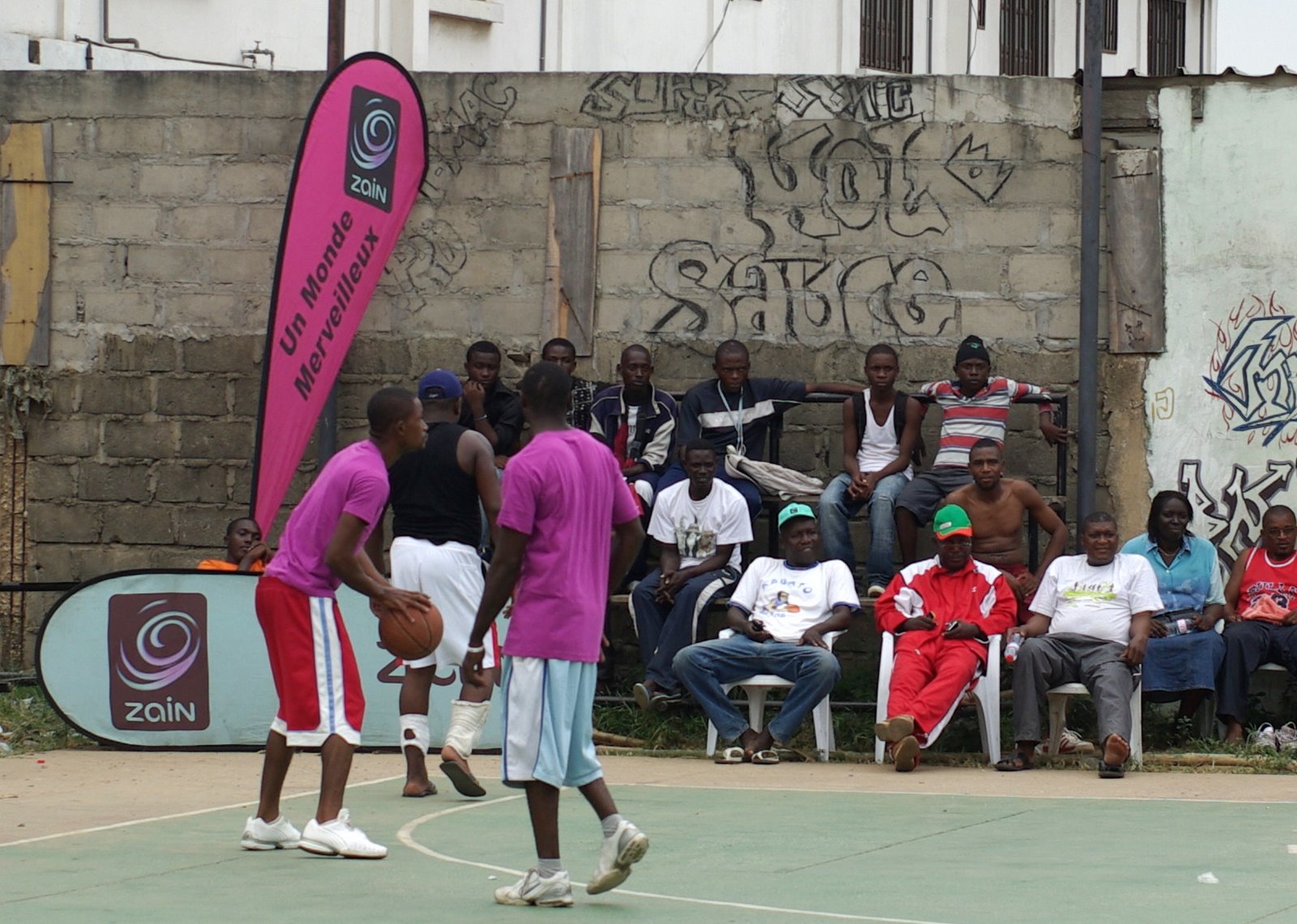
On Monday morning, I stumbled upon a community center with various athletic leagues. I met the guy who ran the basketball league, while also being a professor of microfinance at the local university. I was able to see a couple of the guys on the junior national team play. There was a 15 year old kid who was long, athletic, and really understood the game, and there was also a small point guard that could go and apparently had recently won a national three point shooting contest.
Sunday, September 20, 2009
Rubona
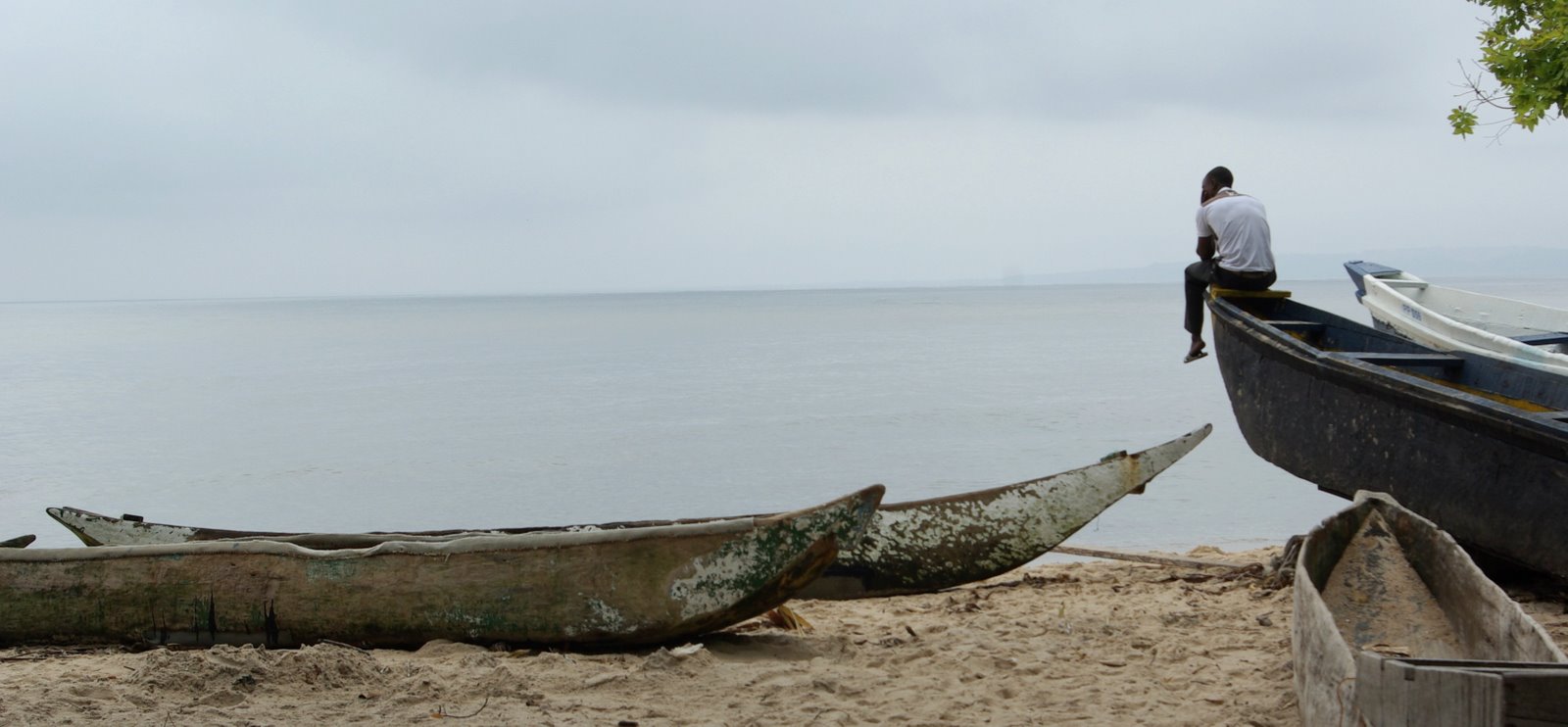
On Sunday I went to Rubona, a small town just a few kilometers south of Gisenyi. It is the largest port on Lake Kivu and also the site of the country's only brewery. I was able to get there early enough in the morning to catch the fishing boats (essentially canoe trimarans called pirogues) coming in to sell their meager hauls.
Friday, September 18, 2009
Actual Impact of Loan Repayment Rates
Here is a link to an article that describes the difficulties in maintaining sustainable microfinance business models despite banks experiencing loan repayment rates well above 90%.
http://microfinance.cgap.org/2009/09/17/is-95-a-good-collection-rate/
Monday, September 14, 2009
Nyamata and Ntarama
On Sunday, I went to visit two genocide memorials that are about 35 km south of Kigali. They are Catholic Churches that were sites of the killing of thousands of Tutsis during the 1994 genocide. The first church visited was Nyamata, and the text below from the National Museum of Rwanda provides a good background:
Nyamata is situated in the Bugesera district of Rwanda about 35 km from the capital city of Kigali. Nyamata and the surrounding area are classified as one of the regions that was most devastated by the 1994 Genocide. The reason for this can be found in the history of the Bugesera region. From the beginning of the 1960s, Tutsi people from different areas of Rwanda were forced to leave their homes and go to live in this region which was considered very unhealthy at that time. Therefore, Bugesera became a region whose population was predominantly Tutsis.
When the Genocide started in April 1994, many people from Nyamata and surrounding areas came to gather in the town of Nyamata. The Catholic Church and nearby houses belonging to the priests and sisters became havens for the frightened people who fled there hoping to escape death. They used the church as a refuge, thinking the militia would not get in and kill them in a place usually thought of as a sanctuary. However, according to the testimonies given by survivors, on April 10th 1994 about 10,000 people were killed in and around the area of the Catholic Church. People from all around congregated in the church and locked the iron door with a padlock to protect themselves from the marauding killers. Members of “Interahamwe”, the Hutu militia, and the Rwandese Government Forces from the surrounding area managed to break down the door and entered the church with their rifles, grenades and machetes. They massacred all the people who were inside this church and also the people in the surrounding area.
The person that provide the tour of the Memorial was a survivor of Nyamata. He was 8 years old at the time and was among 16 total survivors from within the church. He lain among the dead bodies for several days as if he was dead before fleeing to a nearby swamp. He and the other 15 stayed there for 32 days before finding safety. Needless to say, he told stories of horrors that he witnessed that you can't really retell in a venue like this.
The pews and floor of the church are covered with the blood soaked clothes of the thousands of victims. There are holes in the windows and metal ceiling from the shrapnel of the grenades that were used.
Underground behind the church, there are multiple mass graves. They are about 12 feet deep with a narrow walkway and shelves on each side. There are coffins for the bodies that could be identified, but primarily there are just scores of skulls and other bones stacked on the shelves.
The second church, Ntarama, represents a very similar story. Thousands of Tutsis were killed in the same fashion as Nyamata. The banner across the altar reads "If you knew me and you really knew yourself, you would not have killed me."
Saturday, September 12, 2009
Butare (Huye)
On Saturday, I visited Butare, Rwanda's third largest city (~100,000 people as of 2006), which is located about 2.5 hours south of Kigali. The town was actually recently renamed Huye for differentiation when the newly designated provincial name for the region was made Butare. It is where the National Museum and National University are located.
Click here to see the entire album.
The Kids' Pictures from the Hospital
These next two posts feel a little Sally Strutherian to me, so let me explain. Butare's hospital and the National University are located on the southern edge of town. I was trying to walk around the hospital to cut over to the University but ended up hitting a dead end and just had to cut across the hospital grounds. As I walked through, several of the kids in these shots saw the camera on my arm. They wanted me to take their pictures so they could look at themselves on the screen on the back. Ultimately, this led to a whole group of young patients literally taking over 1,000 pictures on my two cameras over the course of about 2.5 hours. I definitely didn't set out on Saturday to get a bunch of pictures of sick Rwandan kids so I could put them on my blog.
While they struggled to keep the camera square and the subject in frame, they took some incredible shots. This post features my favorites of what they took, and the next post is some of my pictures.
Sunday, September 6, 2009
World Cup Qualifier
Rwanda's National Team played Egypt on Saturday as a part of the qualifying tournament for African teams to make the World Cup coming up next summer in South Africa. The national stadium is right in the middle of my neighborhood, and I went to the game with my expat roommates as well as a bunch of Rwandan buddies. Rwanda lost in a fairly sloppy 1-0 game, but it was impressive to see the home fans in action.
Friday, September 4, 2009
Traveling through the Eastern Region
I finally got out of Kigali this Friday. I travelled with UOB’s marketing director, Shami, as he visited the locations of two new branches that the bank is preparing to open. We went about about 75 km due east of Kigali, nearly to the border of Tanznia. The drive is spectacular and dominated by Rwanda’s famous hills, covered in banana trees, coffee plants, and grazing cattle.
Non Sequitur - Health Care
This is the most intelligent and insightful thing I have read all summer re: the health care debate. Highly recommend reading it.
How American Health Care Killed My Father
Its further proof that all politicians should have to take Microeconomics 101.
How American Health Care Killed My Father
Its further proof that all politicians should have to take Microeconomics 101.
Thursday, September 3, 2009
A Few Comments about the Day-to-Day
- UOB is located in the downtown area on the western side of the city. I live on the eastern side of the city near the national football stadium. (See the links section on the right hand side for a link to an annotated map that I will routinely update as my trip and excursions continue.) I carpool in to work with a co-worker and usually take a motorcycle taxi home at night.
- Kigali is generally laid out with nice paved roads running along the spine of each of its many hills. Once you start down each hill away from the central paved roadways, the streets are an incredibly rough and uneven combination of dirt and rock. The water runoff down the hills makes any better road conditions seemingly impossible. As you leave the commercial areas found along side the paved areas, the hillsides are generally all residential (except for small general stores and the occasional butcher), and the further down the hills you go the poorer and less developed the homes and communities.
- Our house appears to be very typical for Kigali’s professional class. It’s a basic one-story home with several bedrooms and bathrooms, but no a/c, land line, TV, etc. There is a modest yard that is surrounded by an 8 ft. fence and a locked gate at the end of the driveway. In addition to the fence, a “guard” is on premises outside the house 24/7. While professional personnel protect some homes, our rotating crew of guards are just Rwandan males looking for an extra source of income. They also help out with chores around the yard and house.
- The food is dominated by rice and potatoes. Every meal features a beautiful range of colors, primarily spanning from dark tan to light brown. The base of a traditional meal is usually both of the starches mentioned previously. Then, there is a stew/meat sauce (typically incredibly overcooked chicken, beef, fish, or goat) that is served over it. As most of you know, I have never shied away from a diet focused heavily on white starches and various proteins, but I can already tell that essentially eating basically the exact same meal twice a day nearly everyday is going to be an adjustment.
- A lunch consisting of the previously described is served buffet-style everyday at the bank for the employees. Mondays and Fridays at work begin with a one-hour devotional period featuring singing and a brief Bible lesson. The UOB choir is featured in a couple photos in one of the albums.
- My first significant project with the Bank is going to be to help them revise and in some areas develop their detailed standard operating procedures. This will be particularly beneficial to me, as it will give me a detailed understanding of all the major segments of the bank that I will be able to utilize with our start-up in Brazzaville.
Tuesday, September 1, 2009
Exploring Around Kigali
These two are pictures of the mass graves at the Kigali Genocide Memorial. It is estimated that 250,000 people are buried at this site.
As I was walking back from the Genocide Memorial, I came across an accident where a driver of a motorcycle taxi had been hit and killed by a truck.
Congressional Delegation Visit
A US Congressional Delegation visited the bank on Monday. Chairman Meeks, Congresswoman Jackson Lee, Congressmen Watt (Charlotte's rep), and Congresswoman Fudge were spending several days in Kigali as a part of a broader tour through Central Africa they were taking during the August Recess.
Wednesday, August 26, 2009
Around Kigali
Here are some disparate shots from my first several days in Kigali. I haven't really had time yet to fully explore the city. But these will hopefully begin to paint the picture.
This is my house.
Friday, August 21, 2009
Kigali Kids
I've been on the ground in Kigali for just over a day. I spent a large part of my first full day in Kigali attending a couple of meetings related to a very active Savings Training program that Hope International is operating with the Anglican Church. This program teaches the poorest in communities across Rwanda how to save money as a part of cooperatives (these folks would be unable to qualify for microfinance loans). Just on the other side of the wall of the Anglican Church's grounds is a typical Kigali neighborhood/slum. A group of kids saw me taking some shots and were more than eager to pose.
Thursday, August 20, 2009
What am I doing here?
- So, I am spending approximately three months here in Rwanda working for Urwego Opportunity Bank (UOB) on behalf of Hope International, a shareholder in the bank. UOB is a mature microfinance institution (MFI) that has over 30,000 credit clients. It also functions as a basic savings-driven commercial bank. I am going to be helping out here with some business and financial analysis, while getting the opportunity to see an established MFI from the inside-out in order to take those lessons learned to the Hope effort I am joining in a few months in Brazzaville, Congo.
- Brazzaville is the capital of the Republic of Congo (Congo), which is not the same “Congo” that HRC just visited and used to be called Zaire. That is the Democratic Republic of Congo (DRC), and it is a much larger country that dominates central Africa geographically. The two countries, not surprisingly, are separated by the Congo River, and their two capitals, Brazzaville and Kinshasa, are directly across the river from each other – Brazza to the northwest and Kinshasa to the southeast. Congo was a French colony, while DRC was under Belgian rule. (If it would be of any interest, Blood River is a new book that is a very interesting and exciting read about one guys journey through the country while giving an engaging overview of the history and current realities of the DRC. I just finished it.)
- I am going to be helping Hope start a new MFI from scratch in Brazzaville, an area that has no real current microfinance presence due to the economic, social, and political difficulties that have troubled the area in recent decades. As I type, we are still awaiting final approval from the governmental authorities to be able to officially get our efforts underway.
- Hope is a Christian-centered organization that supports and develops MFIs across the globe with a particular focus on the toughest places on earth to do such a thing, which naturally led to an emphasis on post-conflict Central Africa. Hope has started or partnered with MFIs in Rwanda, DRC, and Burundi in Central Africa as well as Afghanistan, China, Haiti, and Russia, among several other locations.
- I had become a little stir-crazy standing in the middle of the fairway of the middle market finance universe and had always had a living overseas itch that remained unscratched. Microfinance and the concepts around the poverty alleviation capabilities of free enterprise and the capital markets had been areas of interest since my econ studies and involvement in the Shepherd Poverty Program during my second year at W&L. I was focused on finding a way to work in microfinance in the developing world in a role that wouldn’t be limited to simply a back-office desk job performing tricks with Excel. I wanted to find something more organic and hands-on than that. I never could have imagined those parameters would have led me to Hope and working as a part of a 5 person team to start a microlending bank from the ground up in Brazzaville, Congo, but that’s where I am headed.
Subscribe to:
Posts (Atom)